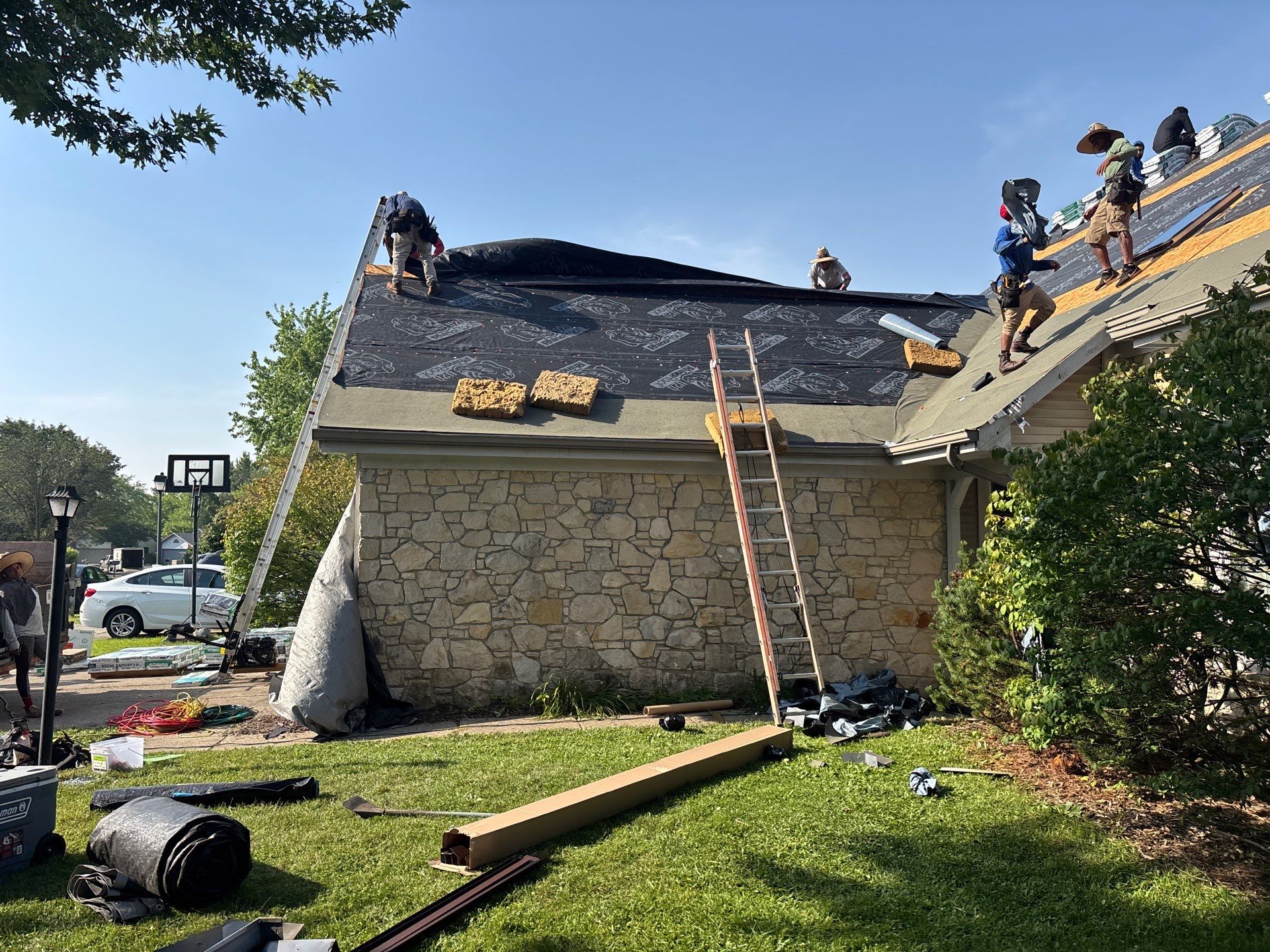
Most flat roofs in Villages at Grassy Creek fall into one of three material families, and understanding which one sits above your head makes every repair conversation easier. The oldest systems still in service tend to be built up roofs, the classic tar and gravel assemblies that were poured in layers decades ago. They are heavy, they are durable when maintained, and when they finally give up they almost always fail at the flashings and the drains rather than in the field. Modified bitumen came next, a rolled asphalt product that is torched or cold applied in two ply sheets, and it still performs well on smaller commercial buildings and the occasional residential addition. The newer single ply membranes, TPO and EPDM, dominate what we install today on commercial roofing projects around Villages at Grassy Creek because they reflect heat, weld tightly at the seams, and give building owners a clean twenty to thirty year service window when the installation is done right.
When a Villages at Grassy Creek property owner calls us about a leak, the first thing we do is walk the roof and map the problem rather than guess at it. Flat roof leaks are famously sneaky. Water can enter at a compromised seam on the north side of the building and show up as a stain forty feet away because it traveled along the insulation boards before finding a fastener hole to drip through. We look at the obvious suspects first, which are the penetrations (plumbing vents, HVAC curbs, skylights), the perimeter flashings where the membrane meets the parapet wall, and the drains or scuppers. A surprising percentage of what looks like a roof failure is actually a clogged drain, a separated lap seam no wider than a pencil, or a cracked pipe boot that a twenty dollar part and an hour of labor will solve. Our roof leak detection and repair process is built to find those small issues before anyone recommends tearing off a roof that still has years of life left.
When Repair Is the Right Call
Repair makes sense when the membrane itself is still flexible, the insulation underneath is dry, and the failures are localized. If your TPO roof is twelve years old, has a few split seams near a rooftop unit, and the rest of the field passes a moisture scan, patching those seams and re flashing the curb is the right answer. If your modified bitumen roof has a blistered area over the south facing slope but the rest of the sheet is sound, we can cut out the blister, prime the substrate, and torch in a new patch that will outlast the surrounding material. Repairs on flat roofs typically run a few hundred to a few thousand dollars depending on access and square footage, and a well executed repair can buy you five to ten additional years when the bones of the roof are still good. We document every repair with photos so that you, your property manager, and your insurance carrier all see exactly what was done and why.
The quality of the patch material matters as much as the skill of the person installing it. We stock manufacturer matched membrane for the common TPO and EPDM thicknesses because a mismatched patch, even one that looks identical from ten feet away, can void the remaining warranty and delaminate within a season or two. On built up roofs we favor compatible asphaltic products and cold applied mastics that flex with the existing field rather than creating a rigid island that cracks the surrounding bitumen. Small details like priming the substrate, rolling the seam with proper pressure, and heat welding at the right temperature are what separate a repair that lasts from one that fails the following spring.
When Replacement Becomes the Smarter Investment
There comes a point where patching a flat roof is throwing money at a losing hand. The tells are consistent. Widespread ponding that stays wet more than forty eight hours after a storm, seams that are splitting in multiple locations across the field, insulation that squishes underfoot because it is saturated, and interior leaks that keep migrating even after targeted repairs. When a moisture survey shows that more than roughly a quarter of the insulation is wet, replacement almost always wins the math, because you are heating and cooling a building through soaked insulation that has lost most of its R-value. Depending on the system you choose and the square footage, a full flat roof replacement in Villages at Grassy Creek generally lands somewhere between eight and fifteen dollars per square foot for a straightforward commercial tear off with new insulation and a single ply membrane, with modified bitumen and specialty assemblies sitting higher. Our free inspections include a clear scope, photos, and a written recommendation so you can compare apples to apples if you are gathering more than one bid.
Replacement is also the right moment to correct mistakes that were baked into the original installation. If the roof has always ponded in the same two spots, tapered insulation can be added during the tear off to move water toward the drains the way the building was supposed to shed it from day one. If the parapet flashings were always marginal, we can extend them higher and tie them into new counterflashing that actually does its job. Building codes around insulation values have also tightened over the last decade, so a replacement almost always leaves the building more energy efficient than it was before, which shows up on monthly utility bills in a way that owners notice quickly.
Storm events add another layer to the decision. Villages at Grassy Creek sees its share of hail, straight line wind, and heavy rain, and flat roofs take that punishment differently than shingle roofs. Hail can bruise a single ply membrane in ways that do not leak today but will fail within a year or two as the damaged spots break down. Wind can lift a corner of a mechanically fastened system just enough to let water under the seams. If your building has been through a significant storm in the last twelve months, it is worth having the roof evaluated before the damage compounds, and it is worth doing it before any insurance deadlines pass. We handle that documentation regularly and can walk you through how the claim process actually works without the pressure tactics that give this industry a bad name.
Ongoing maintenance is what separates a flat roof that dies at fifteen years from one that cruises past twenty five. Twice a year, someone needs to walk the roof, clear the drains, check the seams and flashings, and look for mechanical damage from service technicians who have been up there working on HVAC units. Keeping a simple log of those inspections protects your warranty and gives you early warning before small problems turn into interior damage. It is the least glamorous part of owning a flat roof and by far the most valuable. Villages at Grassy Creek Roofing offers scheduled maintenance agreements for Villages at Grassy Creek property owners who would rather hand that responsibility to a crew that already knows the building, and those agreements almost always pay for themselves the first time we catch a failing seam in October instead of finding it as a ceiling stain in February.